Southern Brave vs Welsh Fire: Match 2 team news, Rose Bowl conditions and early Hundred stakes
Southern Brave open their Hundred Men's 2026 campaign against Welsh Fire at the Rose Bowl in Southampton on Wednesday, 22 July, with a 11:00 PM IST start. Captaincy choices, squad balance and a pace-friendly surface frame the night more than any confirmed casualty list.
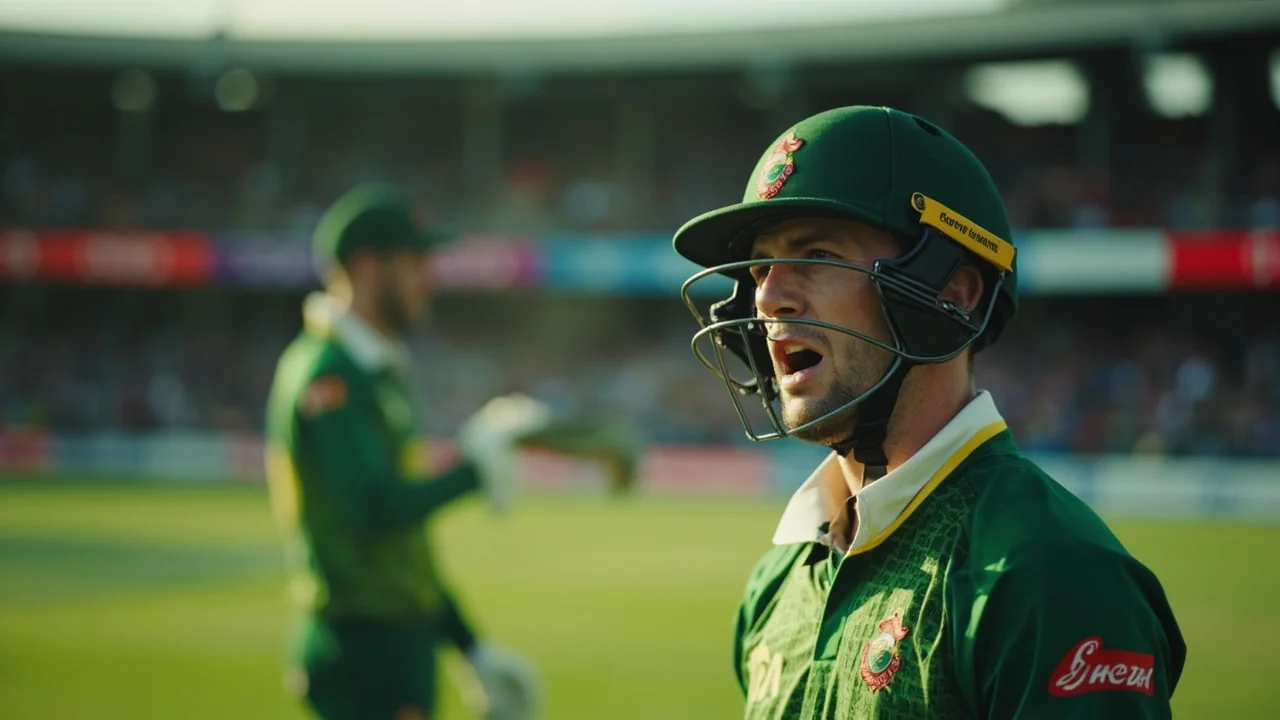
Southern Brave begin their Hundred Men's Competition 2026 schedule at home, hosting Welsh Fire in Match 2 under lights at the Rose Bowl. The fixture is set for Wednesday, 22 July 2026, with the first ball scheduled for 11:00 PM IST. For Indian audiences tracking overseas franchise cricket alongside domestic fantasy windows, the late slot matters as much as the XI: it sits at the end of the Indian evening, when attention usually shifts from daytime league talk to overnight leagues and live streams.
Chris Jordan was secured by Southern Brave at the auction and will lead the side through the tournament. The early briefing around the squad stresses balance rather than a single marquee dependency — a blend of established internationals and younger names asked to share the load across the 100-ball format. Opposite them, Phil Salt captains Welsh Fire and keeps wicket, carrying the dual brief of setting the tone with the bat and steering a franchise that has still not reached the playoffs across five previous editions.
On the specific question of injury updates for SOB vs WEF, the available match briefing does not name fresh absentees, recovery timelines or late fitness tests. What it does supply is a full probable XI for each side, a firm captaincy call for both teams, and a pitch note that will shape bowling plans. Until a separate medical bulletin appears, team news for this fixture is best read through selection strength and role clarity rather than through unverified withdrawal rumours.
Match snapshot
Those three lines fix the operational picture. Date and venue leave little ambiguity. The head-to-head record tilts heavily toward Southern Brave: nine meetings in The Hundred between these sides have produced seven Brave wins, one Fire win and one no-result. Historical lean is not a forecast on its own, yet it does explain why Fire arrive with a narrative burden — they need an early statement if they want this season to look different from the five that never reached the knockout stage.
How Southern Brave are set up
Jordan's appointment as captain anchors the bowling group and the fielding standards expected at the Rose Bowl. The probable Brave XI reads: Tom Abell, Jamie Smith (wicketkeeper), Thomas Rew, David Miller, Marcus Stoinis, Tristan Stubbs, Nikhil Chaudhary, Chris Jordan (captain), Jofra Archer, Adil Rashid and Dan Worrall. That eleven spreads responsibility across the order instead of stacking all power in two or three names.
Abell and Smith give the top order a mix of craft and strike. Smith, highlighted as a batter still underrated in shorter formats, is described as difficult to set fields to because he can score all around the ground. Rew adds another middle-order option. Miller and Stoinis bring the finishing and seam-hitting experience that 100-ball chases or death overs usually demand. Stubbs and Chaudhary extend the batting depth while offering bowling overs if match-ups invite them.
The bowling spine is where Brave look especially coherent on paper. Archer's form with the new ball is singled out in the pre-match note; Worrall supplies another seam option; Jordan himself can close or break partnerships; Rashid remains the spin control option through the middle. In a format that rewards early wickets and tight five-ball sets, that combination is the main reason the preview tips Brave as the more complete unit.
Team news reading: Brave's published probable side presents a fit, balanced XI with Jordan confirmed as captain. No separate injury withdrawal is listed in the match briefing for this fixture.
Welsh Fire's brief under Phil Salt
Welsh Fire's probable XI is packed with pedigree: Jordan Cox, Phil Salt (captain and wicketkeeper), Rachin Ravindra, Joe Root, Matthew Short, Tom Kohler-Cadmore, Marco Jansen, Chris Woakes, Jordan Clark, Lockie Ferguson and Sam Cook. On pure résumé, few opening-round squads can match that list. The issue is not star power; it is conversion. Five editions without a playoff appearance is the organisational context Salt inherits, and the captaincy brief is framed explicitly around ending that run.
Salt is also marked as the key batter for Fire. Opening or high in the order with the gloves, he sets tempo and forces fielding captains into early decisions. Cox offers another aggressive right-hand option. Ravindra and Root give left-right balance and high-class ball-striking or accumulation depending on the surface. Short and Kohler-Cadmore thicken the middle order for a chase or a counter-punch after early wickets.
Batters under the microscope
Jamie Smith for Brave and Phil Salt for Fire are the named batting pivots in the pre-match note. Early composure against the new ball decides whether either side can set a platform before the middle overs open up.
The bowling card is equally serious. Jansen is flagged as Fire's new-ball threat; Woakes brings control and reverse-swing know-how in English conditions; Ferguson and Cook add pace and hard lengths; Clark covers seam overs through the middle. Against a Brave lineup that can accelerate in clusters, Fire need those bowlers to land early sets and deny free hits rather than waiting for middle-over containment alone.
Rose Bowl pitch and toss pressure
The ground note is blunt: Southampton's surface is good for fast bowlers, with enough movement or bite on the new ball to make life uncomfortable for batters. Conditions are expected to ease as the contest progresses, which raises the value of winning the toss and, more importantly, of choosing the right sequence. The briefing states that batting first will be difficult, so captains may prefer to chase if the evening behaviour matches the daytime expectation.
That does not automatically mean "bowl first" is a free decision. In 100-ball cricket, dew, square boundaries and the exact grass cover can still swing the other way. What the pitch report does establish is a hierarchy of skills for the night: hard lengths, disciplined change-ups, and batters willing to absorb a tough first ten to fifteen balls before expanding. Sloggers who need pace on who come in while the ball is hard may find the margin thinner than on flatter league decks.
For fielding captains, the implication is simple. Keep two quality seamers fresh for the power phase equivalent of the format, and resist bowling part-time overs while the ball is still talking. For batters, strike rotation without panic becomes as valuable as the boundary option — especially if one end offers more movement than the other.
Head-to-head weight without overreading it
Southern Brave's 7–1 edge, with one no-result across nine meetings, is a real historical pattern in this rivalry. Patterns like that usually reflect repeated strengths: better death bowling, calmer middle overs, or simply more seasons of coherent squad building. They do not freeze the next result. Fire's current squad, on names alone, is built to interrupt the trend. Root and Ravindra change the middle-over geometry; Jansen and Ferguson change the new-ball geometry; Salt's captaincy changes the intent.
Rivalry edge without the theatre
Brave's 7–1 Hundred record against Fire explains the pressure on Salt's group to make an early statement. Competitive intensity once the first 25 balls land matters as much as the paper XI.
Still, Brave's home start and superior H2H record form the baseline market logic for why the pre-match lean favours the hosts. When a side also fields Archer and Rashid in the same attack, opposing batters must clear two very different threats in the same innings. That is the structural edge the preview cites when it calls Brave the well-rounded team with the stronger bowling unit.
Players under the brightest lights
The briefing isolates four names for special attention. Jamie Smith is the batter to watch for Brave: versatile scoring areas and a keeper's understanding of pace off the surface. Phil Salt is the corresponding figure for Fire, because his starts often dictate whether the chase or the set total has early air. With the ball, Archer's new-ball wickets are the listed threat for Brave, while Jansen is the mirrored assignment for Fire. Those pairings — Smith vs Fire's seam, Salt vs Archer/Worrall, Archer vs Salt/Cox, Jansen vs Abell/Smith — are the matchup clusters most likely to produce the night's swing moments.
Around them, secondary levers still matter. Miller's finishing can punish a sixth-bowler over. Stoinis can break a stuck innings with one clean set. Root can turn a murky surface into a placement exercise. Woakes can dry an end when batters hunt only one side of the ground. Hundred matches are often decided by which "second wave" holds, not only by who wins the first over.
What the injury framing actually means tonight
Search headlines and tag pages for this fixture use the phrase "injury update," yet the substantive briefing stops short of listing a player ruled out, a scan result, or a managed workload plan. Responsible team-news coverage should say that plainly. Inventing a hamstring scare or a delayed flight does not help readers building fantasy sides or planning a live watch.
In practice, the clean reading is this: both clubs have published probable elevens with captains locked in — Jordan for Brave, Salt for Fire — and those lists are the working availability sheet until a later bulletin revises them. If a late change occurs, it will most likely appear as a like-for-like swap inside the same role family (seamer for seamer, middle-order batter for middle-order batter) rather than a wholesale tactical rewrite. Until then, analysis should stay with roles, pitch and head-to-head context.
For fantasy managers who enter overseas contests, that distinction matters. Points projections tied to confirmed roles beat speculative benches. Smith as wicketkeeper-batter, Salt as captain-keeper, Archer and Jansen as new-ball bowlers, and Rashid as middle-over spin are the solid axes in the current note. Everything else is secondary stacking once those anchors are set.
Where Indian fans can watch
Coverage in India is listed on Sony Sports Networks, with live streaming available through the Sony LIV and FanCode apps or websites. Given the 11:00 PM IST start, streaming quality and commentary choice will decide how many casual fans stay through the second innings. The broadcast window also overlaps with late-night fantasy lock times on some operators, so squad confirmation screenshots from the toss remain useful even if you have already locked a core.
Match prediction — and its limits
The source preview backs Southern Brave, arguing that their bowling unit and overall balance give them the edge at home. That conclusion lines up with the head-to-head ledger and with Archer-plus-Rashid control on a seam-friendly night. It remains a reasoned lean, not a guarantee. Fire's batting depth can erase a modest deficit quickly if Salt or Root find rhythm after the new ball, and a single no-ball over at the death can flatten any paper advantage.
A clearer way to hold the prediction is conditional: if Brave's seamers take two wickets inside the first 25 balls, the historical pattern is likely to reassert itself; if Fire survive that burst with wickets in hand on a surface that eases, the "playoff jinx" narrative becomes less relevant than pure firepower. Toss choice will advertise which captain trusts the pitch report most.
How this fixture sits in the wider sports desk
Match 2 is an early-season sample, not a title decider, yet it carries outsized signalling value. Brave want a clean home launch under a new captaincy cycle with Jordan. Fire want evidence that talent density can finally translate into knockout cricket. For readers who follow global T20 and 100-ball calendars alongside Indian league nights, the useful habit is to track confirmed XIs, toss, and the first bowling changes — not recycled social rumours dressed up as medical updates.
Further cricket desks and overnight results continue to land in our ongoing sports news coverage, where match previews, captaincy calls and form notes are filed in the same register: facts first, interpretation second, and no invented injury lists.
Key takeaways before toss
- Southern Brave host Welsh Fire in Hundred Men's 2026 Match 2 at the Rose Bowl, Southampton, on Wednesday, 22 July 2026, starting 11:00 PM IST.
- Chris Jordan captains Brave; Phil Salt captains and keeps for Fire.
- No named fresh injury absences appear in the current match briefing; probable XIs are the working team sheet.
- Head-to-head in The Hundred: Brave 7, Fire 1, no-result 1 from nine meetings.
- Pitch expected to aid fast bowlers early; batting first flagged as the harder hand.
- Players flagged: Jamie Smith and Jofra Archer for Brave; Phil Salt and Marco Jansen for Fire.
- India broadcast: Sony Sports Networks, with streams on Sony LIV and FanCode.
- Preview lean: Southern Brave, on bowling balance and home conditions.
Editor's note: Team news for SOB vs WEF should be updated only when clubs or the competition confirm a change. Until then, treat the probable XIs above as the operational baseline and treat social injury chatter as unconfirmed.
Probable XIs at a glance
Southern Brave: Tom Abell, Jamie Smith (wk), Thomas Rew, David Miller, Marcus Stoinis, Tristan Stubbs, Nikhil Chaudhary, Chris Jordan (c), Jofra Archer, Adil Rashid, Dan Worrall.
Welsh Fire: Jordan Cox, Phil Salt (c & wk), Rachin Ravindra, Joe Root, Matthew Short, Tom Kohler-Cadmore, Marco Jansen, Chris Woakes, Jordan Clark, Lockie Ferguson, Sam Cook.
What comes next on match night
The next hard checkpoint is the on-field toss at the Rose Bowl, due in the window roughly 15–20 minutes before the 11:00 PM IST start. That is when Chris Jordan and Phil Salt lock final elevens and state whether either side trusts the seam-friendly pitch note enough to bowl first. Those confirmed cards — not the probable lists circulating ahead of the game — are the update that should revise late fantasy locks and streaming plans.
Immediately after the toss graphic, watch two narrower signals. First: which new-ball pair opens — Archer with Worrall or Jordan for Brave, Jansen with Woakes or Ferguson for Fire — because that choice advertises how long each captain expects the ball to move. Second: the first bowling change inside the opening 25 balls, which will show whether the strike bowler is being held for a second burst while the surface still offers bite. Those two decisions, not social injury chatter, are the concrete developments that turn this briefing into live team news.